
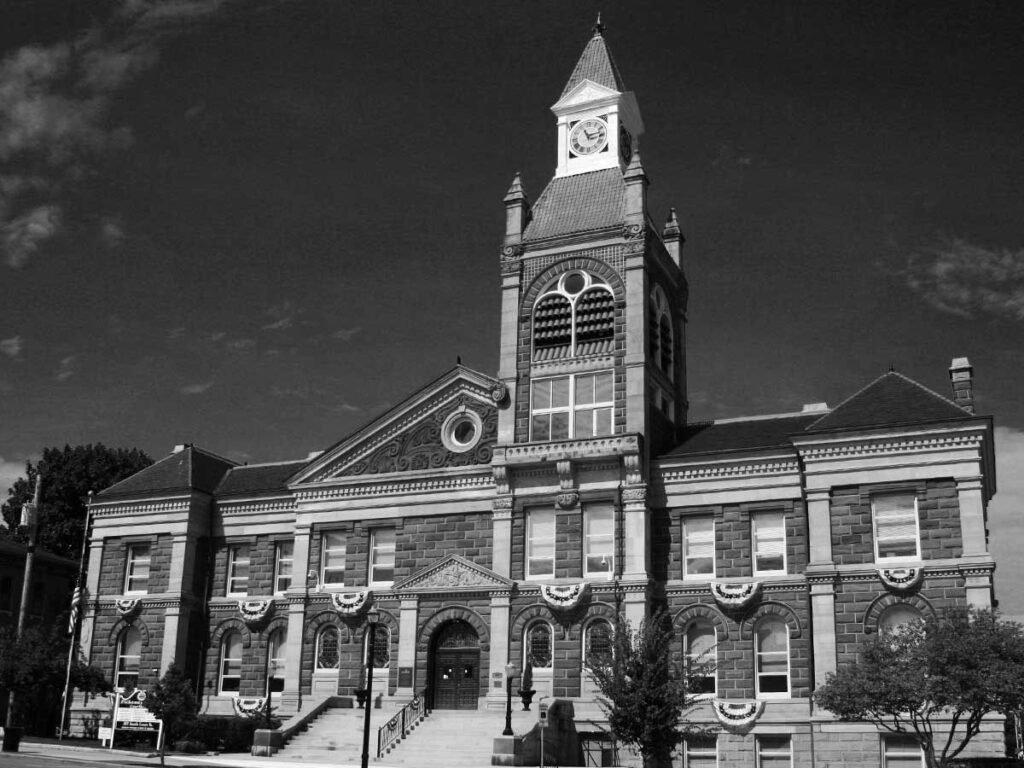
Who Was Behind Ohio’s Strangest Poison-Pen Mystery?
In the spring of 1977, something unsettling began happening in and around Circleville, Ohio.
Anonymous letters started appearing in mailboxes.
At first glance, they might have looked like the work of a neighborhood gossip—ugly accusations written by someone hiding behind anonymity. But these letters were different. The writer seemed to know intimate details about the people being targeted: where they lived, where they worked, who they spent time with, and what they were supposedly doing behind closed doors.
Before long, the letters became threatening.
Then a man died.
Years later, a school-bus driver discovered a booby-trapped gun along her route.
A suspect went to prison.
And still, the letters kept coming.
For decades, one question has lingered over this small Ohio town:
Who was the Circleville Writer?
The First Letters
The campaign appears to have begun in March 1977.
One of its primary targets was Mary Gillispie, a school-bus driver in the Circleville area.
The anonymous writer accused Mary of having an affair with Gordon Massie, the married superintendent of the Westfall School District.
The letters weren’t subtle.
The writer claimed to know where Mary lived, referred to her children, and suggested that her movements were being watched.
Mary’s husband, Ron Gillispie, also began receiving letters.
The writer told Ron about the alleged relationship and reportedly encouraged him to catch Mary and Massie together.
Some messages crossed the line from accusation into outright threats.
The Gillispies were no longer dealing with an anonymous gossip.
Someone appeared determined to frighten them.
A Writer Who Knew Too Much
As the letters spread, other residents, businesses and public officials around Circleville reportedly received anonymous messages of their own.
The accusations varied.
Some dealt with alleged affairs. Others accused residents of misconduct, domestic abuse, financial wrongdoing and other personal secrets.
Many of the messages were written in block lettering. A number were mailed through Columbus rather than Circleville, making the writer harder to trace.
What made the campaign so disturbing wasn’t simply what the letters said.
It was the apparent knowledge behind them.
The writer seemed to know people’s schedules, relationships and private lives.
That suggested something uncomfortable.
The person responsible might not have been an outsider.
They might have been someone who lived among the very people they were tormenting.
The Death of Ron Gillispie
On August 19, 1977, the mystery took a darker turn.
According to later accounts, Ron received a telephone call that evening and came away believing he might finally know who was behind the letters.
He left home in his pickup truck carrying a .22-caliber revolver.
He never returned.
Ron crashed his truck into a tree and died from his injuries. He was 35 years old.
Investigators found his revolver underneath his body.
The gun had been fired once.
Ron also had an elevated blood-alcohol level, and his death was officially ruled an accident.
But because of the threatening letters and the mysterious phone call, questions about the crash have never completely disappeared.
Why had the gun been fired?
Who called Ron?
Where was he going?
Did he actually intend to confront the writer?
And did the person behind the Circleville Letters have anything to do with his death?
There has never been proof that Ron was murdered.
His death remains officially an accident.
Still, it became permanently entwined with the mystery.
The Letters Continue
If Ron’s death was meant to end the harassment, it didn’t.
The letters continued.
Mary remained one of the writer’s favorite targets.
The alleged relationship with Gordon Massie remained a recurring subject.
In 1979, Massie divorced his wife. Mary and Gordon later began dating publicly.
Both maintained that they had not been romantically involved before his divorce.
But to the anonymous writer, the relationship apparently became further justification for continuing the campaign.
Eventually, the harassment moved beyond envelopes and postage stamps.
Signs carrying insulting or obscene messages reportedly appeared around Circleville and along Mary’s school-bus route.
The anonymous writer was no longer confined to the mail.
Someone was physically placing messages where Mary would see them.
And then, in 1983, one of those signs nearly became deadly.
The Booby Trap
On February 7, 1983, Mary was driving her school-bus route when she noticed a sign containing an obscene message about her 13-year-old daughter.
Mary stopped and attempted to remove it.
She soon realized the sign was attached by twine to a box.
Inside was a loaded handgun.
The weapon had been rigged into a crude booby trap designed to fire when someone pulled on the sign.
The device malfunctioned.
Mary survived.
For investigators, this changed everything.
The Circleville case was no longer simply about anonymous threats.
Someone had apparently tried to kill Mary Gillispie.
The Gun Leads to Paul Freshour
Investigators examined the weapon and found that its serial number had been damaged or obscured.
Ohio Bureau of Criminal Investigation examiners were nevertheless able to recover enough information to trace it.
The gun had once belonged to Paul Freshour.
Freshour was not a stranger to the Gillispie family. He was married to Karen Sue Freshour, Ron Gillispie’s sister.
When questioned, Paul acknowledged owning the firearm.
But he said the gun had been stolen from his garage weeks earlier.
That explanation did not satisfy investigators.
And soon, Paul’s own wife would point the finger directly at him.
Karen Sue Freshour’s Accusation
Paul and Karen were going through a contentious divorce when investigators began focusing on him.
Karen told authorities she believed Paul was the Circleville Writer.
She reportedly claimed that she had previously discovered anonymous letters in their home.
One had supposedly been torn up in a toilet.
That was damaging testimony.
But it also came from a person involved in an increasingly hostile marital separation.
Karen’s accusation became part of the case against Paul, but it was not proof on its own.
Paul denied writing the letters.
He also denied constructing the booby trap.
The Handwriting Evidence
Investigators asked Paul to provide handwriting samples.
Those samples were compared with the anonymous letters and writing associated with the booby trap.
Document examiners testified that similarities existed.
The handwriting evidence became central to the prosecution’s case.
But another distinction is crucial.
Paul Freshour was not put on trial for writing the Circleville Letters.
He was charged with attempted murder for allegedly placing the booby-trapped gun.
The anonymous letters were introduced as evidence intended to connect him to the crime.
At trial in October 1983, prosecutors were permitted to introduce dozens of anonymous letters.
The jury ultimately found Paul Freshour guilty.
He received an indefinite sentence of seven to twenty-five years in prison.
For many people in Circleville, the mystery appeared to be over.
The writer had been caught.
Except there was one major problem.
The Letters Didn’t Stop
Paul Freshour went to prison.
The Circleville Letters continued.
Reports of threatening correspondence persisted while he was incarcerated.
Pickaway County officials complained to prison authorities in 1985 and again in 1991, alleging that threatening letters were still being sent to residents and officials.
Freshour denied responsibility.
Prison officials reportedly searched him, monitored his communications and restricted his access to writing materials.
According to later reporting, at one point he was placed under especially restrictive conditions.
And still, letters reportedly appeared.
Then something even stranger happened.
Freshour himself received one.
The anonymous letter taunted him about being in prison and suggested that more than one person had been involved in setting him up.
Was it genuine?
A copycat?
An accomplice?
A message Freshour somehow arranged himself?
No one has definitively answered that question.
The Prison Problem
The continuing letters created an obvious contradiction.
If Paul Freshour was the Circleville Writer, how was he continuing the campaign from prison?
There are several possible explanations.
Perhaps someone outside prison was helping him.
Perhaps letters had been written in advance.
Perhaps another person had always been involved.
Perhaps copycats appeared after the case became notorious.
Or perhaps Freshour had never been the original writer at all.
Prison-era letters are one of the strongest reasons people continue to question whether Freshour explains the entire mystery.
But they do not automatically prove his innocence.
Decades later, handwriting analysis would complicate the case yet again.
The Man Near the Yellow El Camino
Another troubling detail emerged from the investigation into the booby trap.
A second school-bus driver reportedly passed the location roughly 20 minutes before Mary discovered the device.
She recalled seeing a man near the scene and a yellow El Camino.
The man reportedly had sandy-colored hair and did not resemble Paul Freshour.
If the timing was accurate, the sighting could be significant.
Was the man placing the trap?
Removing something?
Waiting for someone?
Or was he simply an innocent person who happened to be nearby?
No evidence has established what he was doing there.
Yet the sighting remains one of the most intriguing unresolved leads in the case.
Could the Letters and the Booby Trap Have Been Different Crimes?
This possibility has received more attention in recent years.
What if the person writing the letters wasn’t necessarily the same person who built the booby trap?
The letter writer had spent years hiding behind anonymity.
Constructing a firearm trap and placing it along a public road would have created a far greater risk of being seen or caught.
That raises another theory:
Perhaps someone used the already notorious Circleville letter campaign as cover for an attempted murder.
If so, the case might not involve one mystery.
It might involve two.
The Unsolved Mysteries Postcard
By the early 1990s, the Circleville case had attracted national attention.
The television program Unsolved Mysteries began investigating.
Then, in December 1993, the show’s offices received an anonymous postcard.
It warned the program to stay away from Circleville and specifically cautioned the producers not to harm Pickaway County Sheriff Dwight Radcliff.
The card was signed:
“The Circleville Writer.”
Why would someone claiming to be the writer warn a television program away?
And why specifically mention Sheriff Radcliff?
No evidence has shown that Radcliff was involved in the letter campaign, and the identity of the person who mailed the postcard has never been established.
Anyone familiar with the case could have sent it.
Still, the postcard meant that after nearly two decades, someone was apparently still willing to step forward and claim the name.
The Circleville segment aired on Unsolved Mysteries in November 1994.
Freshour Goes Free
Earlier that year, in May 1994, Paul Freshour was released on parole after serving roughly ten years.
He continued to maintain his innocence.
He said he had neither written the letters nor constructed the booby trap that nearly killed Mary.
Around this same period, something else happened.
The Circleville Letters stopped.
After nearly twenty years of accusations, threats and intimidation, the writer simply disappeared.
No confession.
No final message that has been definitively authenticated.
No arrest for the letter-writing campaign.
Just silence.
The timing creates another uncomfortable question.
If Freshour was responsible, why would the letters stop once he was free and theoretically had greater opportunity to send them?
And if Freshour wasn’t responsible, why did the real writer stop at almost exactly the same time?
Maybe it was coincidence.
Maybe it wasn’t.
Modern Handwriting Analysis
Decades later, CBS’s 48 Hours revisited the case.
Forensic document examiner Beverley East examined known examples of Freshour’s handwriting alongside dozens of anonymous Circleville letters spanning different years.
She concluded that the samples shared distinctive characteristics and believed the anonymous letters she examined were written by Freshour.
One unusual feature was the writer’s distinctive formation of a capital G.
East reportedly found that characteristic even in correspondence sent during Freshour’s incarceration.
That finding brought the case full circle.
If Freshour couldn’t have mailed the prison-era letters, why did their handwriting apparently resemble his?
Could someone have copied his writing?
Was an accomplice involved?
Were prison restrictions less absolute than later accounts suggested?
Or had the handwriting evidence been given too much weight?
The analysis strengthened the argument against Freshour.
It did not completely resolve the mystery.
More Than One Writer?
Perhaps the simplest explanation is that there never was a single Circleville Writer.
The campaign lasted roughly seventeen years.
Hundreds of letters were reportedly sent.
Different people could have become involved at different times.
One person may have started the campaign.
Another might have copied the style.
Someone might have mailed letters for another person.
The booby trap could have involved someone else altogether.
And once the story became famous, copycats could have entered the picture.
There is no proof of a conspiracy involving multiple writers.
But the theory would explain some of the contradictions that have made the case so difficult to understand.
What About Paul Freshour?
Freshour died on June 28, 2012, at the age of 70.
He maintained his innocence until his death.
Legally, one fact remains important:
Paul Freshour was convicted of attempted murder.
He was never convicted of being the Circleville Writer.
No one ever was.
The Pickaway County Sheriff’s Office has considered the matter closed, but the identity of the person—or people—behind the letters remains publicly disputed.
That leaves us with a case where the official outcome and the lingering mystery are not quite the same thing.
Who Wrote the Circleville Letters?
There are several possibilities.
Paul Freshour
The gun had belonged to him.
His estranged wife accused him.
Handwriting experts connected him with the anonymous correspondence.
A jury convicted him of attempting to murder Mary Gillispie.
The evidence against him cannot simply be dismissed.
Someone Else
Letters continued while Freshour was incarcerated.
Another man was reportedly seen near the booby-trap location shortly before Mary discovered it.
Freshour had no fingerprints tying him directly to the device.
And he maintained for the rest of his life that he had been framed.
Multiple People
This theory might explain why the campaign continued for so long and why apparently contradictory evidence exists.
Perhaps Freshour wrote some letters.
Perhaps someone else wrote others.
Perhaps the booby trap came from a separate person altogether.
We simply don’t know.
The Questions That Remain
Almost fifty years after the first letters appeared, some of the simplest questions still have no agreed-upon answers.
Who sent the first letter?
How did the writer know so much about the private lives of Circleville residents?
Who called Ron Gillispie shortly before his fatal crash?
Why had his revolver been fired?
Who placed the booby trap along Mary Gillispie’s bus route?
Who was the man seen near the yellow El Camino?
How did threatening letters continue while Freshour was imprisoned?
Who mailed the postcard to Unsolved Mysteries?
And perhaps most importantly:
Was there ever really just one Circleville Writer?
The File Remains Unsettled
For nearly two decades, someone used ordinary pieces of paper to frighten an Ohio community.
The writer didn’t need to break into homes.
They didn’t need to appear outside someone’s window.
They simply needed people to believe they were watching.
That may be what makes the Circleville Letters so unsettling even today.
The case isn’t merely about anonymous mail.
It is about the fear created when a stranger seems to know something they shouldn’t.
A man went to prison.
The letters continued.
Experts still disagree about what that means.
And the person—or people—who knew so many of Circleville’s secrets managed to keep the biggest secret of all:
their identity.
Sources & Further Reading
For readers who want to explore the case further, useful sources include:
- CBS News / 48 Hours investigations into the Circleville Letters
- CBS News gallery of surviving Circleville letters
- Unsolved Mysteries — “Poison Pen Murder”
- Federal appellate decisions involving Paul Freshour and Sheriff Dwight Radcliff
- Historical reporting from the Circleville Herald
- Pickaway County court and law-enforcement records relating to Paul Freshour and the 1983 booby-trap case
Note: Some details surrounding the Circleville Letters remain disputed. Where accounts conflict, this article distinguishes documented events from allegations and theories rather than presenting speculation as established fact.